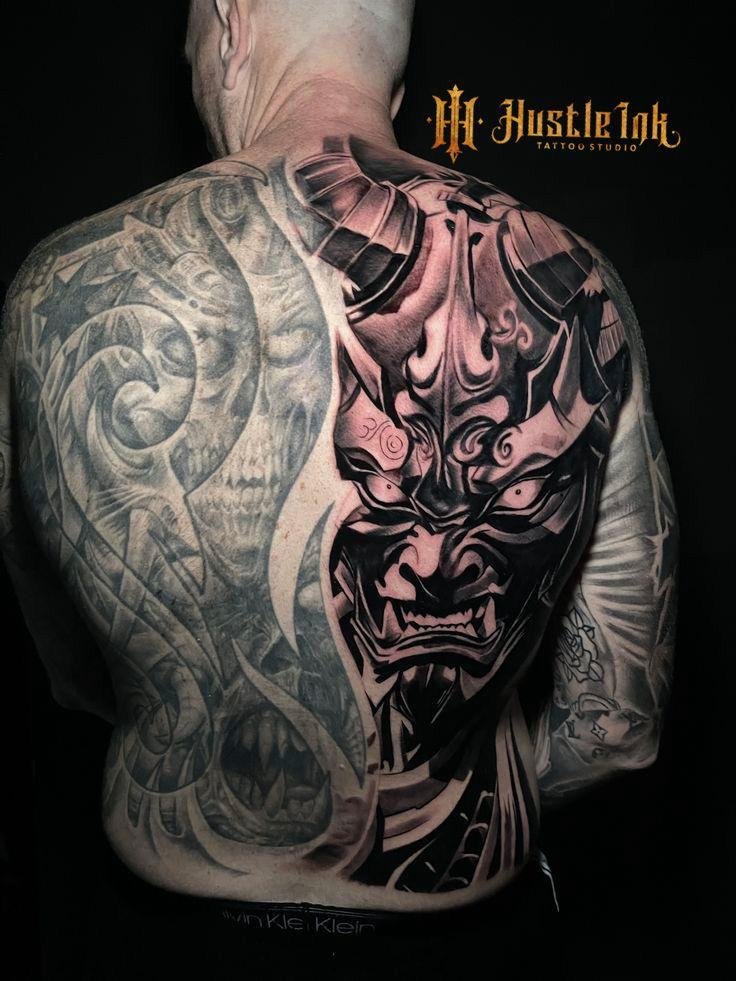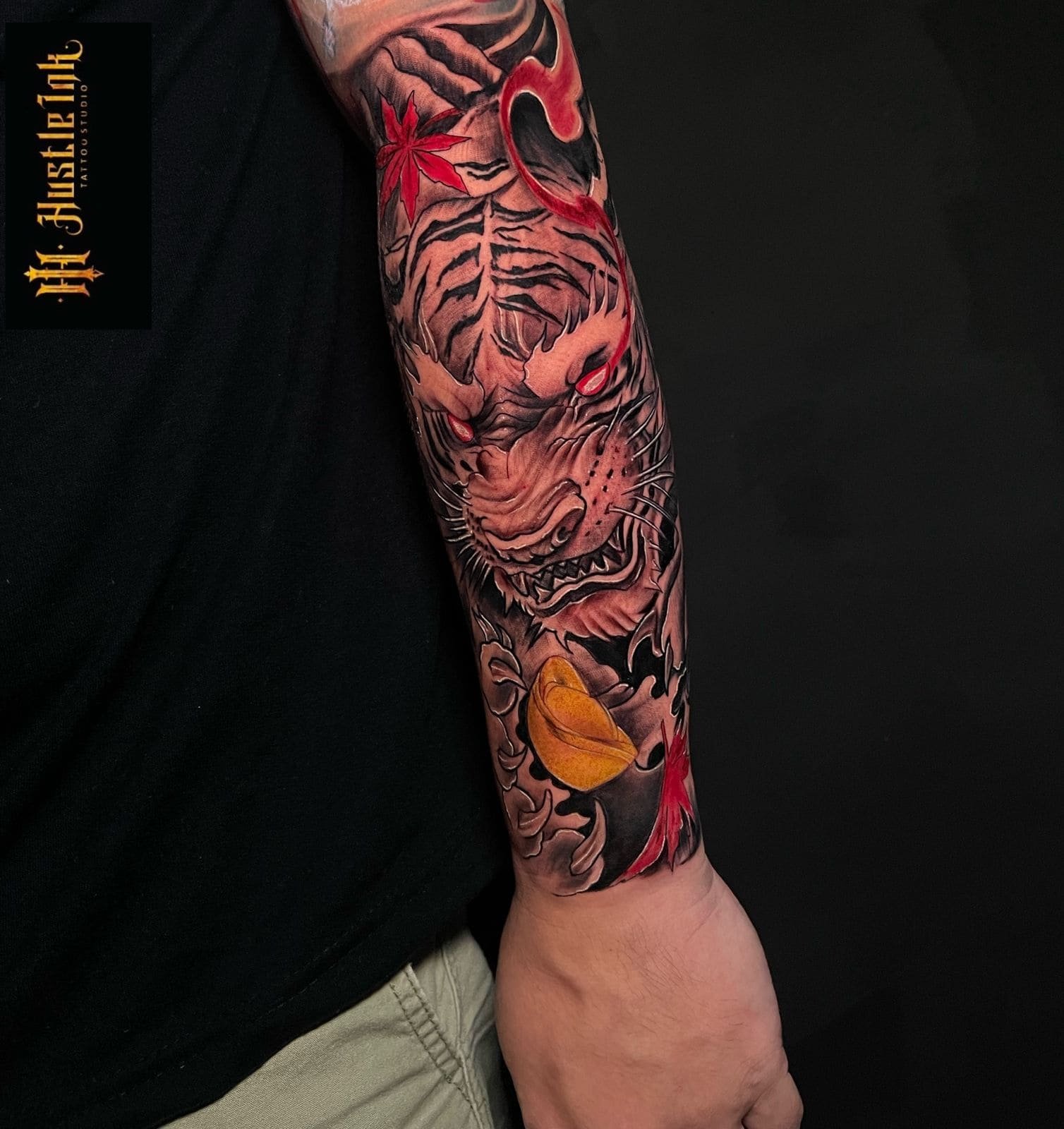
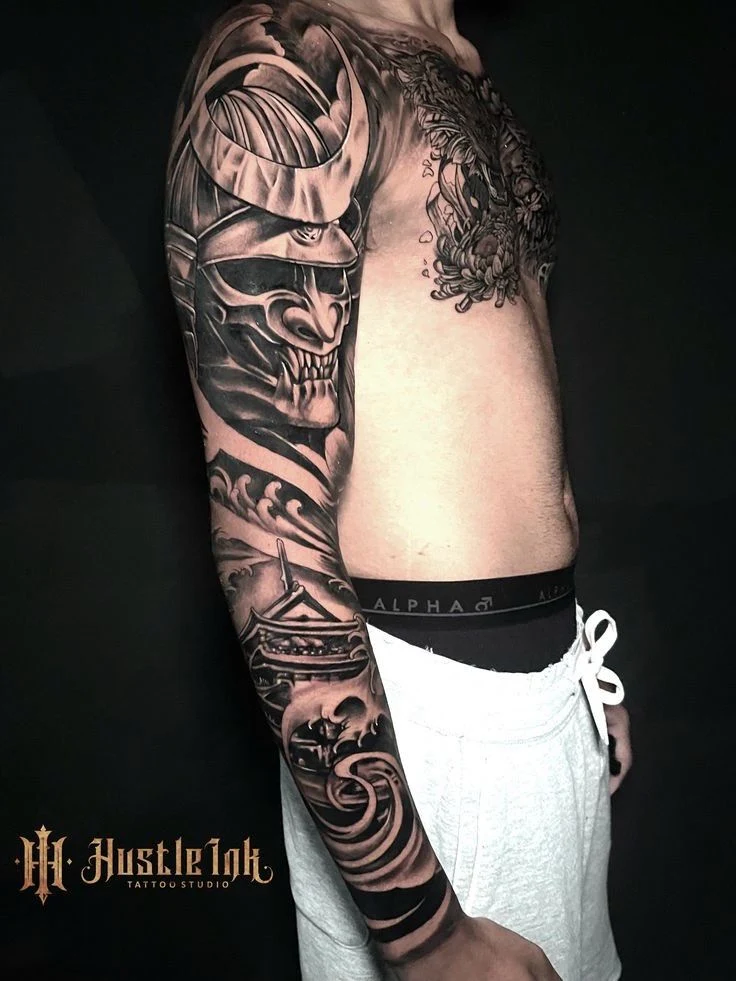
Bali has earned its place on the global tattoo map not because it’s cheap, but because the artists are genuinely good. The island has a concentration of skilled tattooers working across every major style, drawing clients from Australia, Europe, and Southeast Asia who come specifically to get tattooed here rather than at home.
If you’re planning a tattoo in Bali and trying to work out which style is right for you, this guide breaks down every style available at Hustle Ink Tattoo Studio in Legian. We cover what each style looks like, how it’s done, what it costs, and which of our artists specialises in it so you can walk in with clarity and confidence.
How to Choose the Right Tattoo Style
Before picking a style, it helps to think through a few things.
How does it age? Bold black styles tribal, blackwork, Japanese are the most durable. The high contrast between solid black and skin holds for decades when done well. Fine line and watercolour can be just as stunning, but they require a skilled hand and careful aftercare in Bali’s tropical sun. This isn’t a reason to avoid them; it’s just something to factor into your placement and sun protection habits afterward.
Where on your body? Some styles suit certain placements better than others. Fine line and minimalist work are beautiful on forearms, wrists, and ribs. Tribal and Japanese thrive on shoulders, calves, and sleeves. Realism is at its best on flat surfaces with room to work upper arm, thigh, chest. Talk to your artist about placement before you lock anything in.
What does it mean to you? Some clients want cultural depth a Balinese motif, a Japanese koi that carries specific symbolism, a Polynesian design that maps their ancestry. Others want pure aesthetics. Neither is wrong. The key is being honest with your artist so they can guide the design toward something that will still feel right in ten years.
The 10 Tattoo Styles at Hustle Ink Bali
1. Fine Line Tattoo
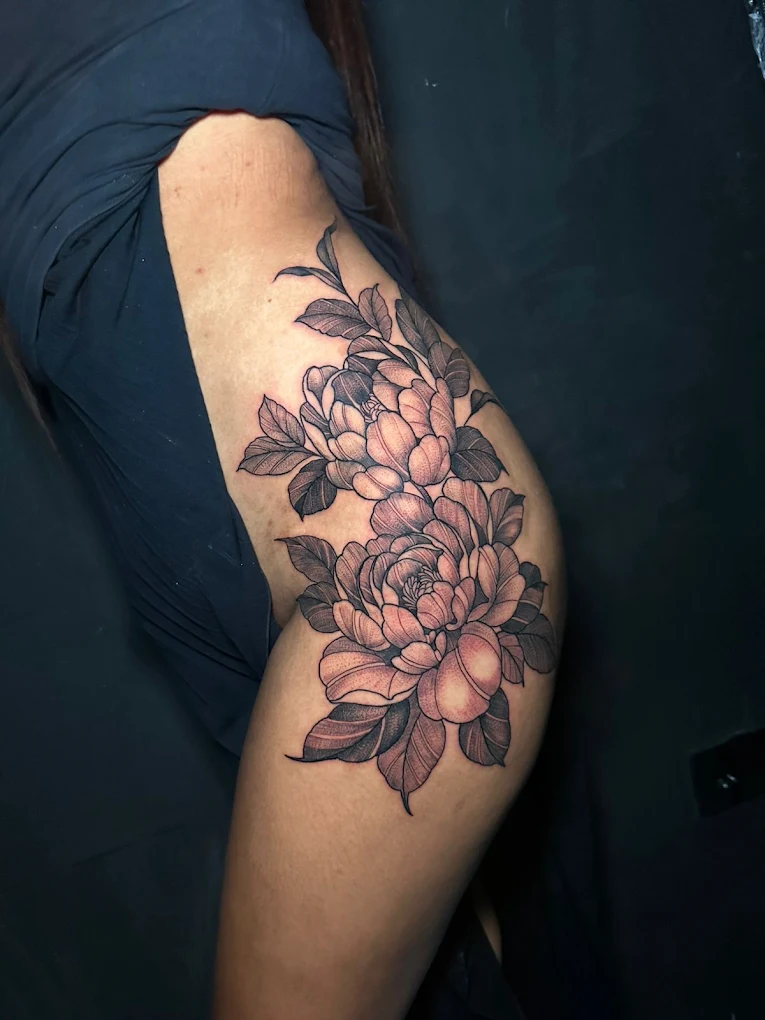
Fine line tattoo uses single-needle or thin-gauge needles to create intricate designs with minimal shading and maximum detail. The result is delicate, precise, and understated think botanical illustrations, geometric patterns, lettering in thin script, and portrait details rendered with a lightness that heavier styles can’t achieve.
It became one of the dominant styles of the 2010s and has held its popularity because it works on almost everyone. First-timers love it for being approachable. Experienced collectors love it for the nuance it adds between bolder pieces.
Fine line does require more careful aftercare than bold black work, particularly in Bali’s sun. A healed fine line piece exposed to UV without protection will fade faster than a Japanese or tribal tattoo of the same age. Good quality ink, a skilled hand, and consistent SPF application after healing are the three factors that keep fine line looking sharp long-term.
At Hustle Ink, fine line in Bali is led by Noe Noe and Yuri, both of whom have built strong portfolios in detailed botanical, geometric, and portrait fine line work.
2. Realism Tattoo
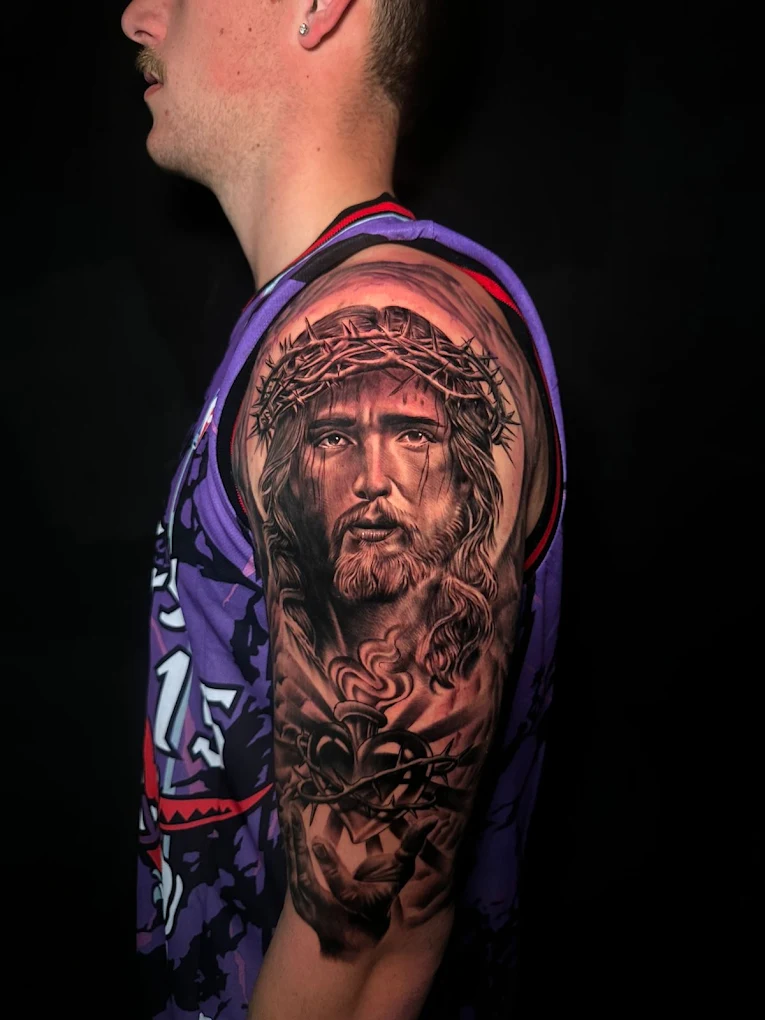
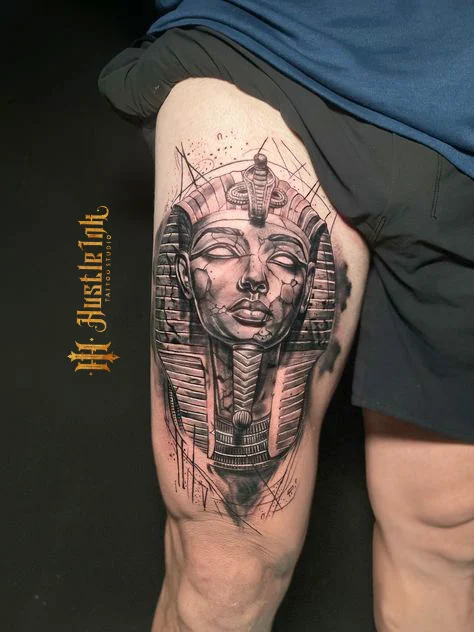
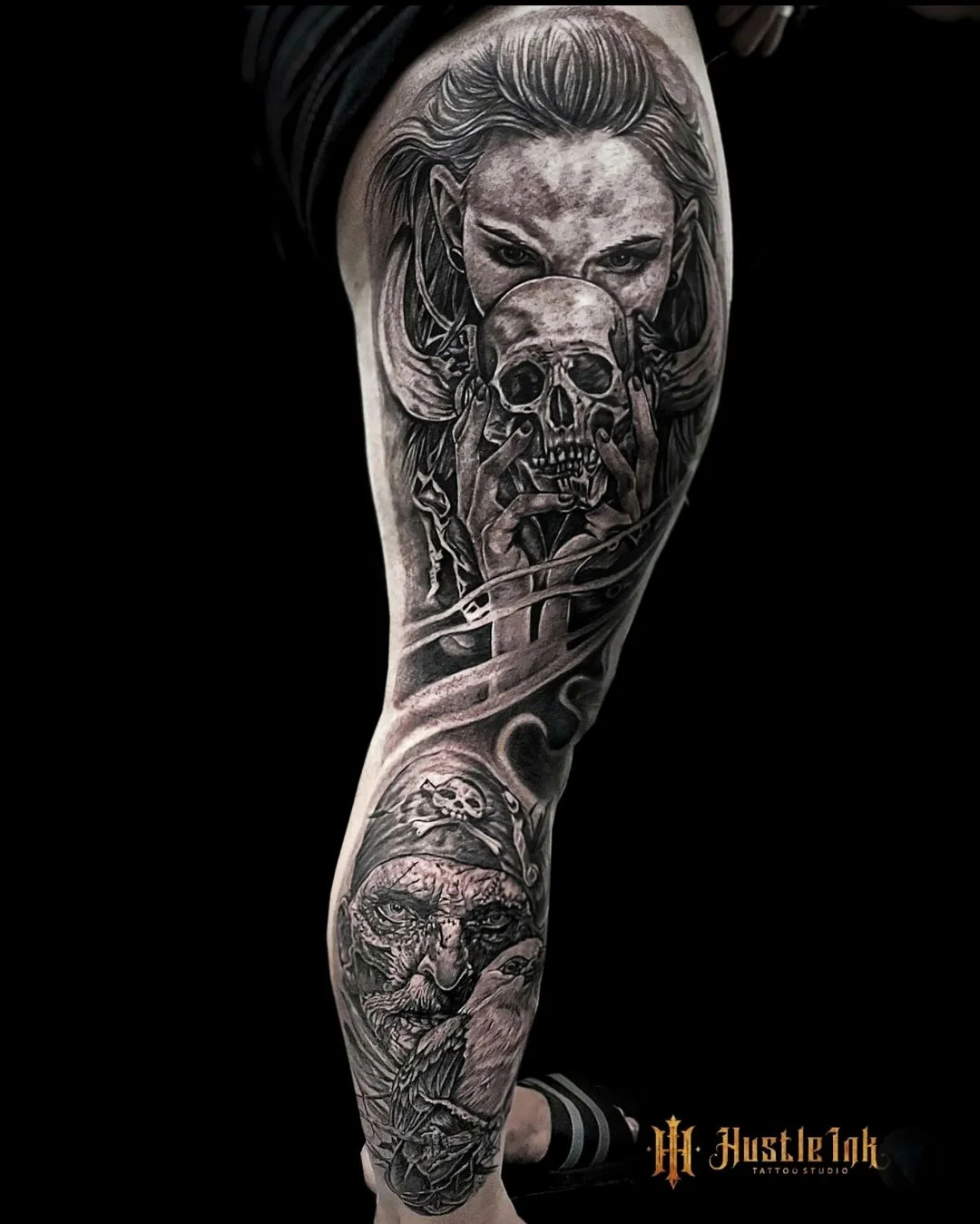
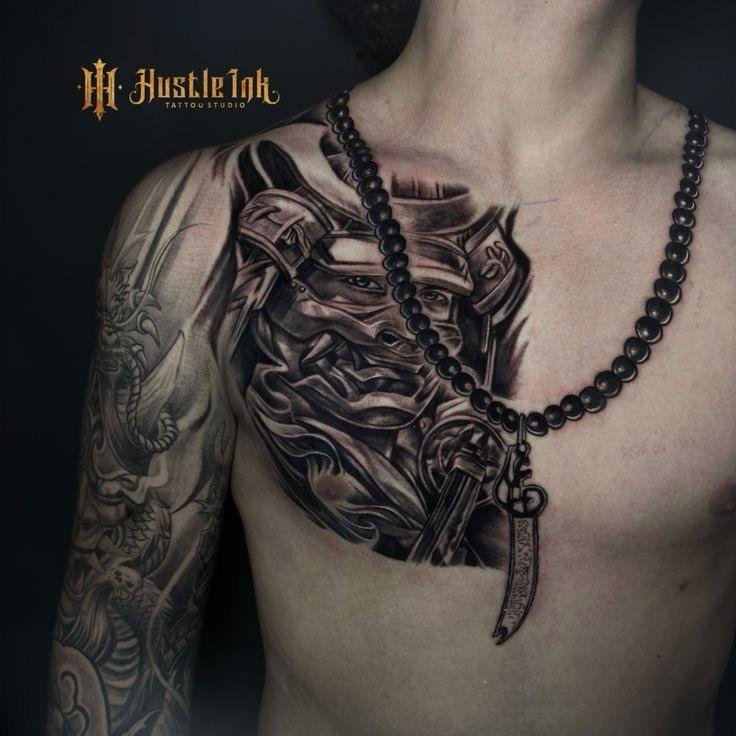
Realism is the most technically demanding style in tattooing. The goal is photographic accuracy portraits, animals, landscapes, and objects rendered with depth, shadow, and dimension that make the skin look like a printed photograph. Done well, a realism piece is genuinely jaw-dropping. Done poorly, it’s immediately obvious.
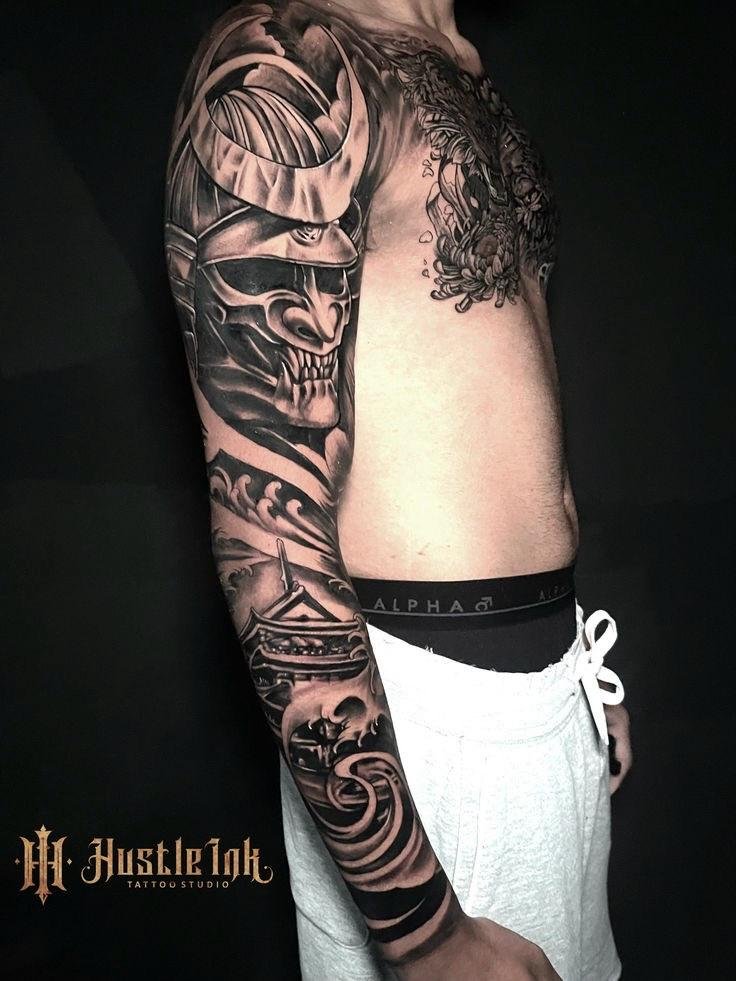
Black and grey realism is the most popular form: using dilutions of black ink to create smooth gradients and tonal range. Colour realism adds another layer of complexity, requiring precise understanding of how pigments interact with skin tone and how they age over time.
Realism takes longer than most other styles. A detailed portrait can take a full day session or more. The complexity is what makes it worth commissioning from a specialist rather than a generalist the difference between a good realism tattoo and a great one is entirely in the artist’s ability to handle light, shadow, and transition.
At Hustle Ink, Noe Noe and Arok both execute realism tattoo work in Bali across portrait, wildlife, and illustrative subjects.
3. Black & Grey Tattoo
Black and grey is a technique rather than a style in the traditional sense it’s the application of black ink in varying dilutions to create depth, dimension, and smooth tonal range without colour. It crosses over into almost every style: black and grey realism, black and grey Japanese, black and grey tribal, black and grey illustrative.
It’s one of the most versatile techniques in tattooing for a reason. It suits every skin tone, ages more predictably than colour work, and tends to maintain its legibility over decades if executed with the right ink density.
A lot of clients who originally wanted colour end up choosing black and grey after seeing the longevity argument side by side. That’s not a criticism of colour it’s a reflection of how good black and grey can look, and how well it holds up in the long run.
4. Japanese Tattoo
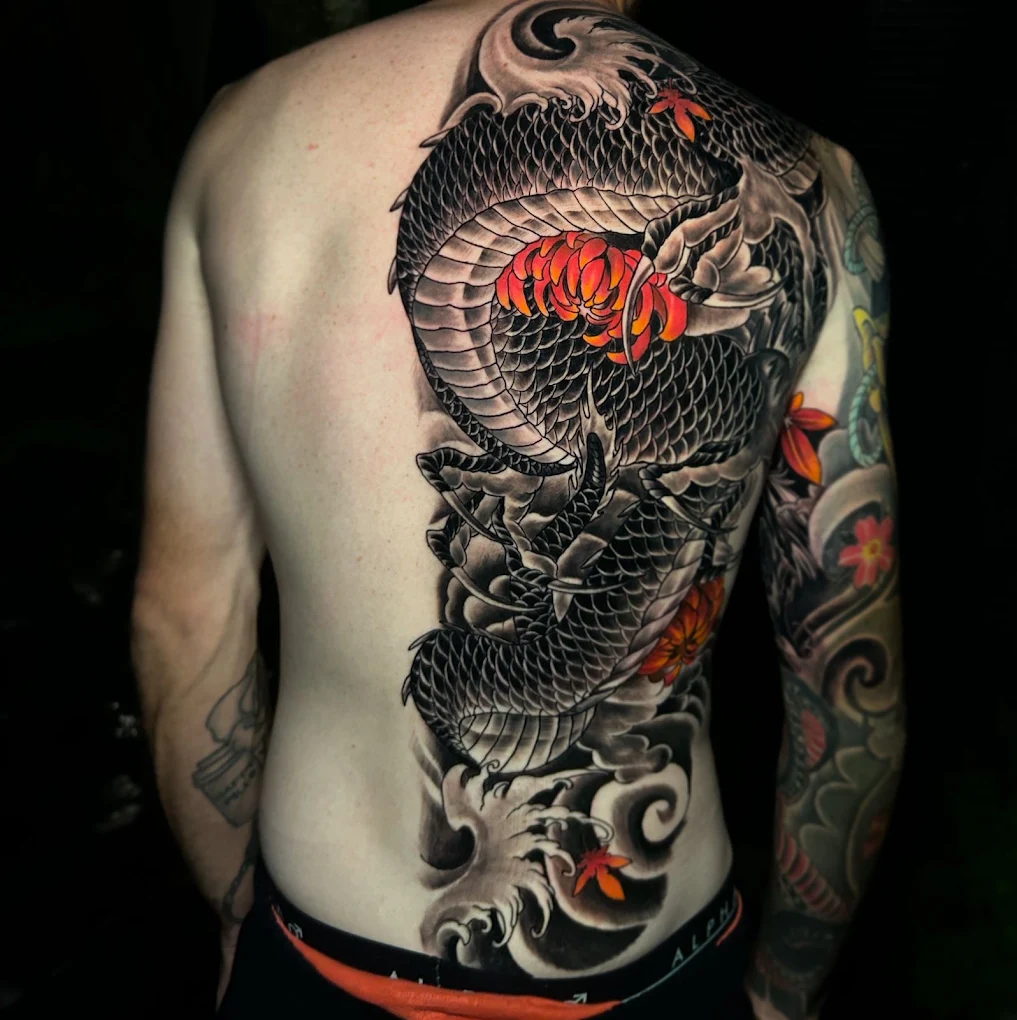
Japanese tattooing is one of the most storied traditions in the art form. It has a visual language that developed over centuries bold outlines, flat colour fills with minimal shading gradients, and a specific set of iconography: koi fish, dragons, tigers, peonies, chrysanthemums, waves, clouds, oni masks, and phoenixes, each carrying specific symbolic meaning.
The defining characteristic of Japanese style is that it’s designed to move with the body. The compositions follow the limb’s anatomy a sleeve wraps around the arm the way a wave wraps around a shoreline. This is why Japanese tattoo is one of the go-to styles for sleeves, back pieces, and thigh work. It doesn’t just sit on the skin; it integrates with it.
Japanese tattooing rewards going large. Small Japanese pieces work, but the style’s impact really lands when there’s room to build a composition a full sleeve that tells a story, a back piece that fills the canvas. See our full breakdown of Japanese tattoo style in Bali for placement examples and pricing.
5. Color Tattoo
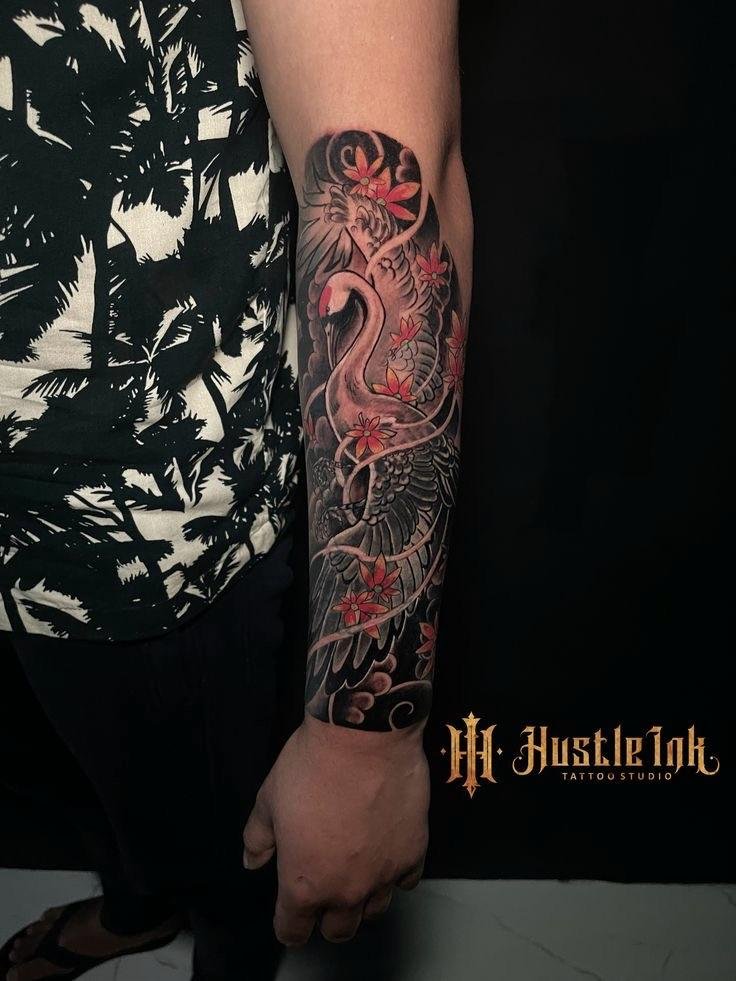
Colour tattooing covers a wide range of approaches from the flat, saturated fills of neo-traditional and Japanese style to the layered complexity of colour realism to the loose washes of watercolour. What they share is the use of pigmented ink beyond black and grey.
Getting a good colour tattoo in Bali requires finding an artist with strong colour theory and experience with how specific pigments behave on skin in a tropical climate. UV exposure degrades colour ink faster than black ink, and poorly saturated colour fills can look muddy within a few years. The solution isn’t to avoid colour it’s to get colour done right, with quality pigments and proper technique, and to maintain it with SPF protection after healing.
The reward is a tattoo with warmth and vibrancy that black and grey simply can’t replicate. Done well, colour tattooing in Bali ages beautifully you just have to treat it with more care than bold black work.
6. Watercolor Tattoo
Watercolour tattoo mimics the look of watercolour paint loose washes of colour, soft blurred edges, and a painterly quality that sets it apart from every other tattoo style. At its best, a watercolour tattoo looks like it was brushed directly onto the skin in one fluid motion.
It’s most effective as a standalone piece or combined with fine line outlines that give the design structure. Without some linework to anchor the composition, watercolour elements can appear to bleed into each other as the tattoo ages the outline acts as a container that keeps the piece reading cleanly over time.
Watercolour suits clients who want something that feels less like a tattoo and more like wearable art. It’s popular for botanical subjects, abstract shapes, and illustrative pieces where softness is part of the aesthetic. If you’re leaning this way, our watercolor tattoo Bali guide covers what to expect from the process and how to care for it in the tropics.
7. Pastel Tattoo
Pastel tattooing is an evolution of colour work that uses muted, desaturated tones rather than saturated primaries. Think blush pink, dusty blue, sage green, lavender, soft peach a palette that reads as gentle and dreamy rather than bold and graphic.
The style has grown rapidly over the last several years, driven largely by its popularity on social media and its appeal among clients who want something feminine, whimsical, or softly illustrative. It works particularly well for florals, celestial designs (moon phases, stars, constellations), delicate animal portraits, and abstract illustrative pieces.
Pastel ink requires the same care as any colour tattoo: quality pigments, proper saturation, and consistent sun protection after healing. The softer the palette, the more important the execution thin, poorly applied pastel can look washed out from day one rather than intentionally soft. Read more about how we approach pastel tattoo in Bali and what makes it hold up well long-term.
8. Minimalist Tattoo
Minimalist tattoo takes the opposite approach to realism or Japanese it strips a design down to its essential elements. Clean single lines, simple geometric shapes, negative space used deliberately, and compositions that communicate a lot with a little.
It’s a style that suits people who want something meaningful without something large. A small symbol on a wrist, a single-line portrait on a forearm, a geometric shape behind an ear. It’s also one of the most versatile styles for stacking minimalist pieces that can be added over time without overwhelming each other, gradually building a cohesive collection.
One thing worth knowing: minimalist tattoos require just as much skill as complex ones, arguably more. When a design has no visual noise to hide behind, every line has to be perfect. A poorly executed minimalist tattoo looks like a mistake. Done well, it’s one of the cleanest and most elegant things you can put on your body. Our minimalist tattoo Bali page has examples of what this looks like in practice.
9. Tribal Tattoo
Tribal is one of the oldest forms of tattooing on earth. Long before tattoos were a lifestyle choice, they were markers of identity, status, and spiritual protection across cultures from Polynesia to Borneo to the Philippines. At Hustle Ink, we work across the main tribal traditions: Polynesian, Balinese, Borneo/Dayak, and contemporary blackwork tribal.
Polynesian tribal is the most widely requested bold black fills, geometric patterns, and symbols that map ancestry and strength. Balinese-inspired tribal draws from the island’s Hindu heritage: Barong, Kala, lotus motifs, and temple geometry. Borneo tribal uses flowing vine-like patterns historically worn by Iban warriors. Blackwork tribal is a modern evolution that uses solid black fills and negative space without committing to a specific cultural tradition.
Tribal is one of the best-ageing styles in tattooing. The high contrast between solid black and skin holds for decades when properly executed. It’s also one of the most effective cover-up tools the density of the black fill can conceal most existing tattoos when the design is planned correctly.
Our artist Goper specialises in tribal and cover-up work at Hustle Ink. If you’re seriously considering tribal, our tribal tattoo Bali guide goes deep on the different traditions, what the symbols mean, and what a session with Goper looks like from consultation to finished piece.
10. Cover-Up Tattoo
Cover-up is not a style it’s a specialisation. Covering an existing tattoo requires a different approach to design, composition, and colour theory than starting on clean skin. The artist has to work with what’s already there, using darkness, density, and clever visual composition to conceal the original piece while creating something that stands on its own.
The most effective cover-up styles are those that use significant black fill: tribal, blackwork, Japanese, and bold neo-traditional. Lighter styles can work on lighter existing tattoos, but the general rule is that the cover-up needs to be darker and denser than what it’s covering.
At Hustle Ink, Goper handles cover-up consultations. The first step is always an honest assessment not every tattoo can be fully concealed without going extremely dark, and we’d rather tell you that upfront than overpromise. Book a consultation, bring a clear photo of your existing piece, and read through our cover-up tattoo Bali page to understand what’s possible before you come in.
Tattoo Style Price Comparison Hustle Ink Bali 2027
Prices below are starting rates. Final pricing depends on design complexity, size, and session time. All prices include sterile single-use equipment, premium ink, and an aftercare kit.
| Style | Starting Price (IDR) | Starting Price (AUD) |
| Minimalist | IDR 600,000 | AUD $58 |
| Tribal (small) | IDR 800,000 | AUD $77 |
| Fine line (small) | IDR 800,000 | AUD $77 |
| Watercolor | IDR 1,000,000 | AUD $96 |
| Pastel | IDR 1,000,000 | AUD $96 |
| Black & grey | IDR 1,000,000 | AUD $96 |
| Color tattoo | IDR 1,200,000 | AUD $115 |
| Japanese | IDR 1,500,000 | AUD $144 |
| Realism | IDR 1,500,000 | AUD $144 |
| Cover-up | IDR 2,500,000 | AUD $240 |
For a full breakdown of prices by size and session length, see our Tattoo Prices in Bali 2027 guide.
Meet the Artists
Each artist at Hustle Ink has a primary specialisation. When you book or walk in, we match you with the right artist for the work you want, not just whoever’s available.
| Artist | Specialisation |
| Noe Noe | Fine line, realism (portrait and wildlife) |
| Yuri | Fine line (botanical, geometric, lettering) |
| Arok | Realism, black & grey |
| Goper | Tribal, blackwork, cover-up |
If you’re not sure which artist fits your idea, message us on WhatsApp with a brief description or reference image and we’ll point you in the right direction before your visit.
Frequently Asked Questions
Yes hybrid work is some of the most interesting tattooing being done right now. Fine line and watercolour elements together, Japanese linework with black and grey shading, tribal blackwork as a sleeve foundation with realism inserts these combinations work when the artist understands both styles well enough to blend them intentionally. Book a consultation if you have a hybrid concept.
Skin tone, texture, and placement all affect ageing. As a general rule: bold black styles (tribal, Japanese, blackwork) age most predictably. Colour and watercolour require more sun protection but can hold up well with proper care. Your artist will give you an honest assessment based on your specific skin and the placement you have in mind.
Walk-ins are welcome for smaller pieces and simpler work. For large pieces, custom designs, full sleeves, or specific artists book at least 3–5 days in advance. If you’re visiting Bali specifically for a tattoo, contact us before you arrive.
Heavily sunburned skin should not be tattooed. Mildly tanned skin is fine it won’t affect ink quality or healing significantly. If you’ve had serious sun exposure, let your skin recover for a few days before your appointment.
Book Your Appointment
📍 Jalan Legian No. 165, Legian, Kuta, Bali
💬 Chat with us on WhatsApp free quote, no obligation
📅 Walk-ins welcome daily | Large pieces: book ahead
Not sure which style is right for you? Send us a message with your idea, a reference image, a rough description, or just a vibe and we’ll help you figure it out before you arrive.
Hustle Ink Tattoo Studio Legian, Bali. Sterile. Professional. Artist-led.