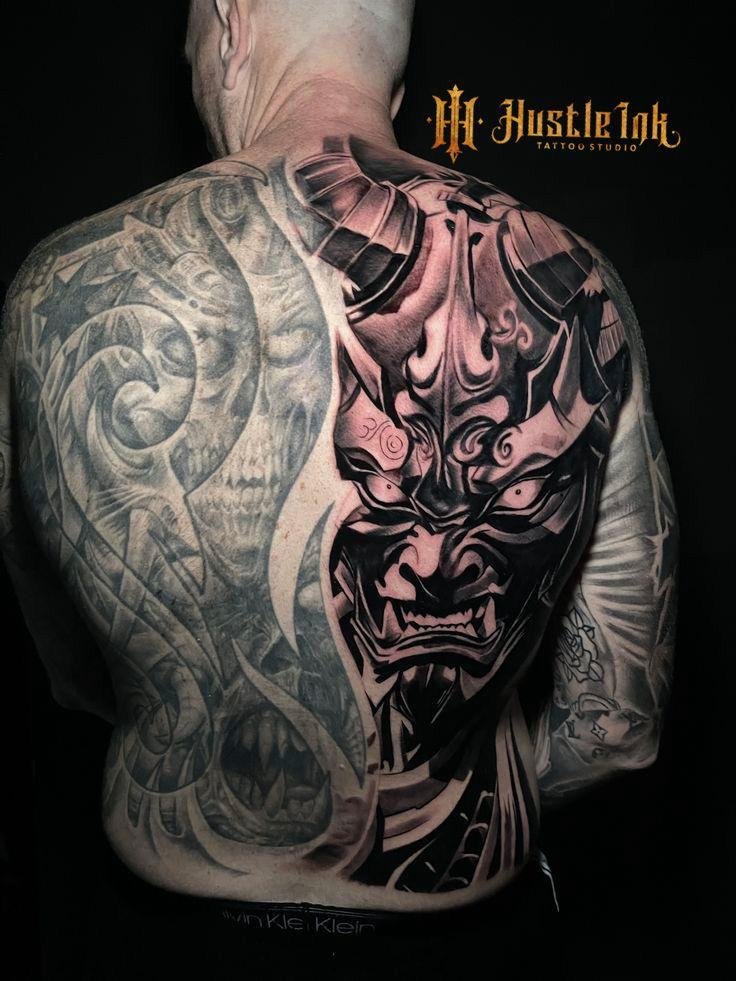
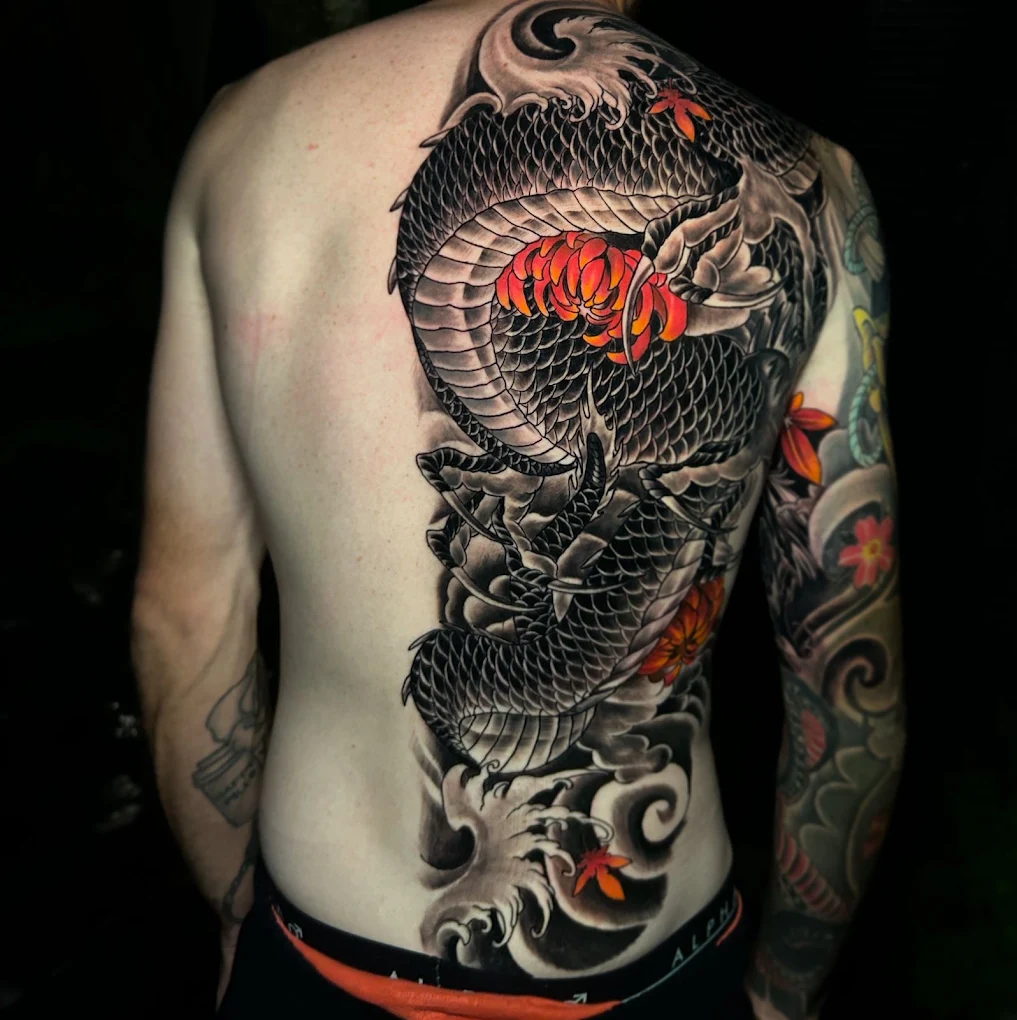
Japanese tattoo style is one of the most requested styles at tattoo studios across Bali and for good reason. The compositions are bold, the motifs carry weight, and the visual language translates across cultures in a way few other tattoo traditions do.
Bali has built a strong reputation for this style specifically. Artists here have trained extensively in irezumi-influenced work, and the pricing makes large-scale Japanese pieces sleeves, back panels, chest work genuinely achievable compared to studios in Australia, the UK, or Europe.
This guide covers what Japanese-style tattooing actually involves, the most popular motifs and what they represent, how long and how much to budget, and what to look for when choosing an artist. If you’re considering a Japanese piece during your time in Bali, this is where to start.
Before booking: Japanese style rewards planning. The larger the piece, the more it matters that the composition is designed for your specific body placement not adapted from a standard template. Reading this in full before your consultation will save time and produce a better result.
What Japanese Tattoo Style Actually Is
Irezumi (入れ墨) is traditional Japanese tattooing with roots in the Edo period (1603–1868). Modern Japanese-style tattooing borrows the core visual logic of irezumi bold black outlines, specific motifs, body-mapped compositions, and dense color fills and applies it through contemporary technique.
Four things define the style:
Bold black outlines. Japanese tattooing uses strong, clean outlines as structural anchors. The linework is what gives the style its legibility and longevity.
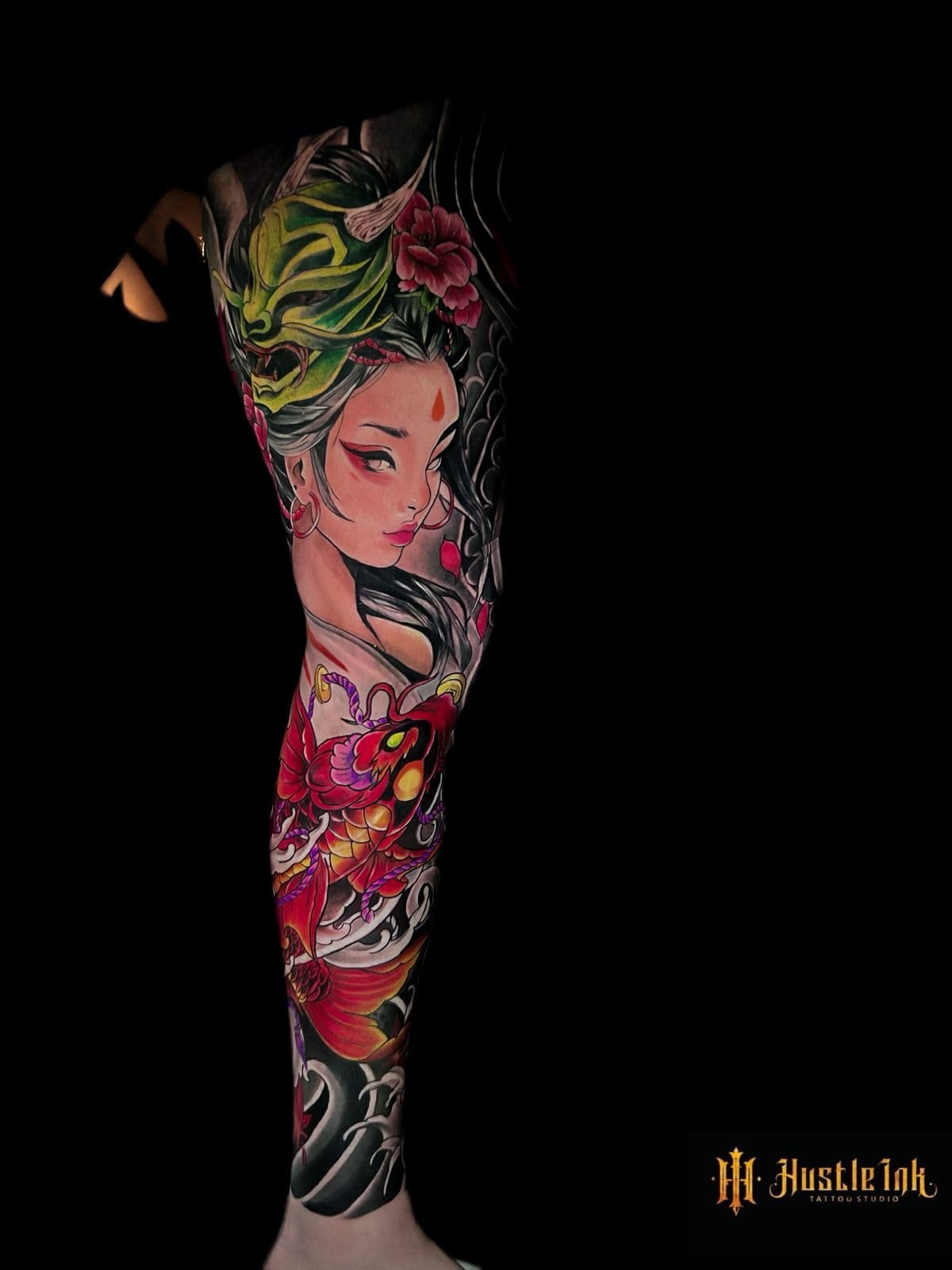
A defined motif vocabulary. Specific subjects carry specific meaning: koi (perseverance), dragons (strength), tigers (courage), peonies (prosperity), cherry blossoms (impermanence), waves (power). Most clients choose motifs with the symbolism in mind.
Body-mapped composition. Traditional irezumi was designed to work with the body’s anatomy wrapping around limbs, following the curve of shoulders, flowing across the back. Japanese style at its best isn’t placed on the body, it’s built for it.
Dense color fills. Classic Japanese work uses deep reds, blues, and greens against strong black outlines. The color isn’t decorative it’s structural.
Traditional Irezumi vs. Japanese-Style Tattooing
Worth distinguishing before going further. Traditional irezumi from a practising Japanese master is a different thing from Japanese-style work created by an artist trained in the contemporary tradition.
Both are legitimate they’re simply not the same. What most clients get in Bali is the latter: tattoo work that uses the visual language of irezumi, interpreted by an artist working in the global contemporary tradition. This produces excellent results. It’s also the dominant form of Japanese-style tattooing worldwide.
Popular Motifs and What They Mean
Koi Fish
The most requested Japanese tattoo motif globally. In Japanese folklore, koi swimming upstream become dragons the fish represents perseverance through adversity.
Koi work well as single subjects on the forearm or calf, as paired designs with two fish swimming in opposite directions, or as the central element in a water-themed sleeve with waves and lotus.
Dragon (Ryū)
Japanese dragons differ from Western and Chinese iconography. Ryū are serpentine and scaled closer to a water spirit than a fire-breather. The sinuous body shape needs space: half sleeves and full back pieces are where dragon compositions read properly.
In Japanese tradition, dragons represent wisdom, strength, and protection.
Tiger
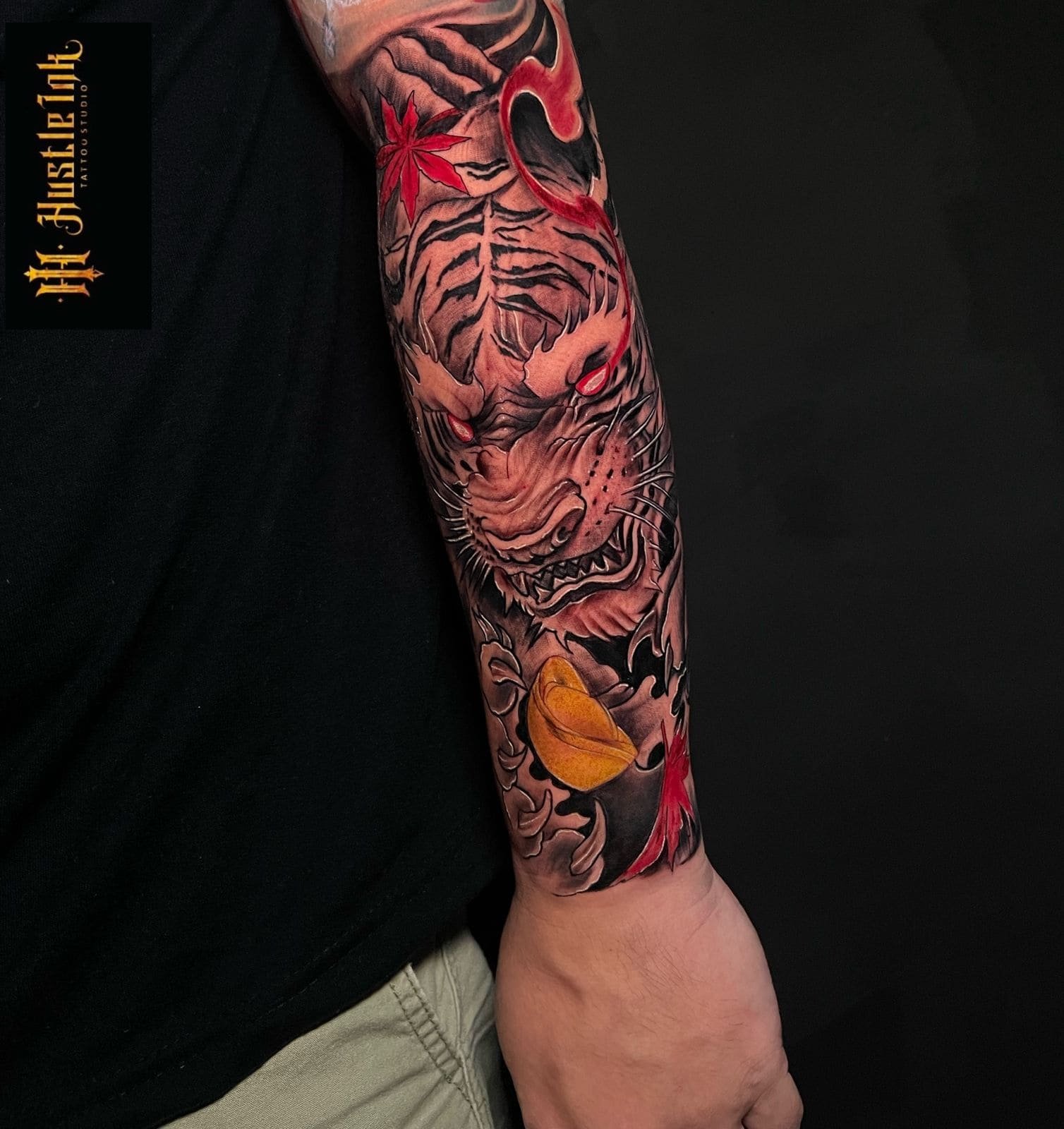
Traditionally paired with the dragon as complementary opposites earth and sky, strength and wisdom. Tiger compositions typically sit on the arm or chest, depicted in motion with bamboo or wind elements.
Waves (Nami)
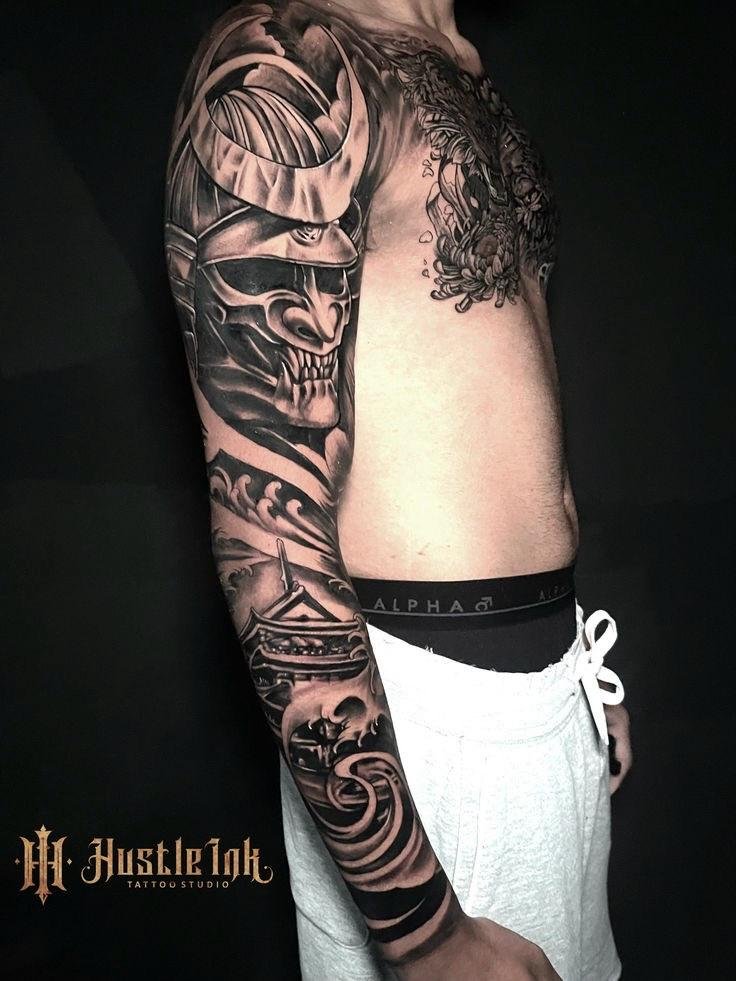
Drawn directly from ukiyo-e woodblock printing, particularly Hokusai’s Great Wave. Wave patterns are among the most versatile elements in the style: powerful as standalone pieces, effective as backgrounds, and essential as compositional connectors in sleeve work.
Peony (Botan)
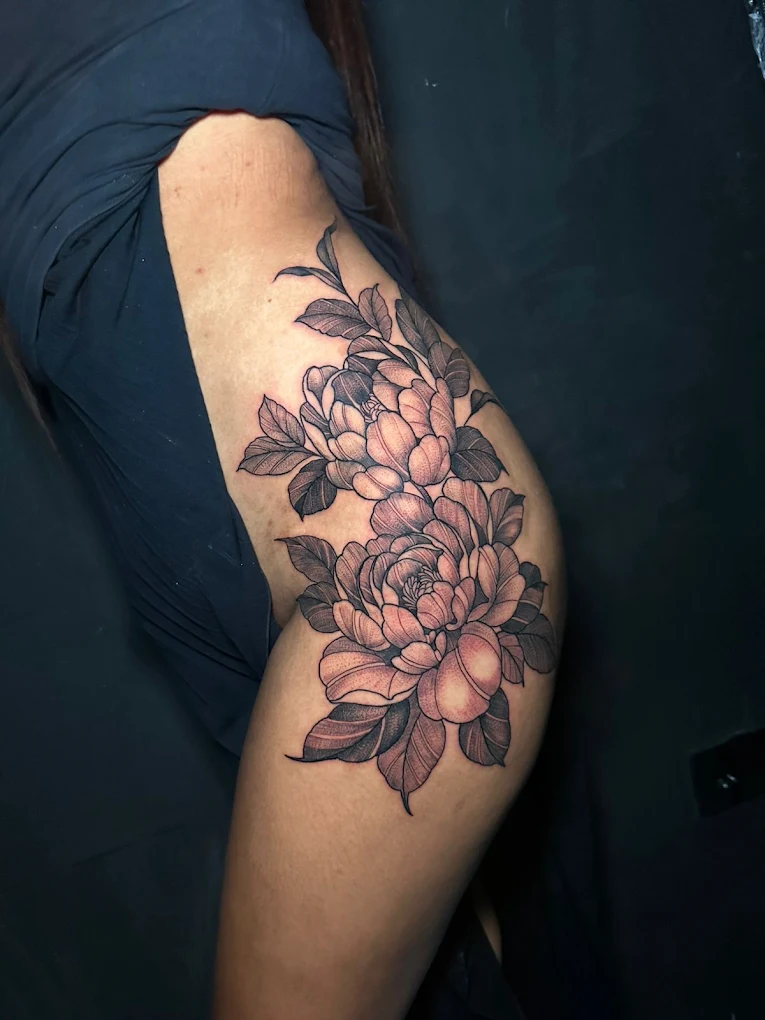
The peony represents wealth, prosperity, and beauty. Dense and layered in form, peony work is an ideal vehicle for color often paired with butterflies, birds, or used as filler in larger compositions.
Cherry Blossom (Sakura)
A symbol of impermanence and transience. Sakura are used as filler elements, small standalone pieces, or as part of sleeve compositions alongside other motifs.
Snake (Hebi)
In Japanese tradition, snakes represent protection and transformation not malevolence. The elongated form suits arm and leg placements well.
Color vs. Black and Grey
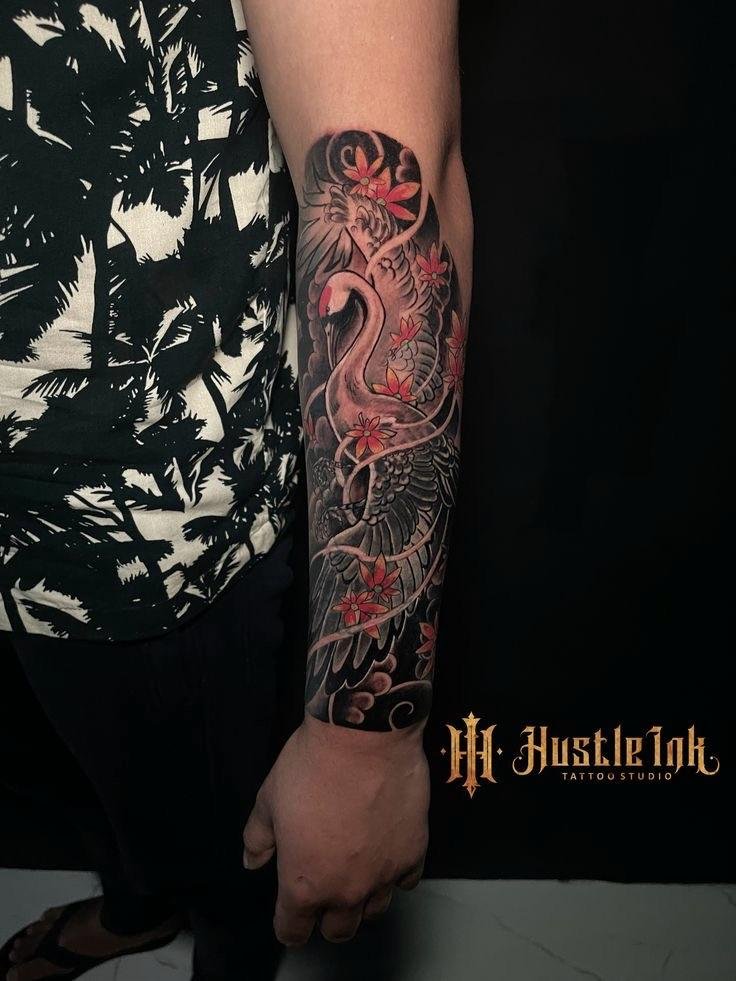
Japanese tattooing is traditionally rendered in color. The bold outlines with vivid red, blue, and green fills are the defining visual of irezumi-influenced work.
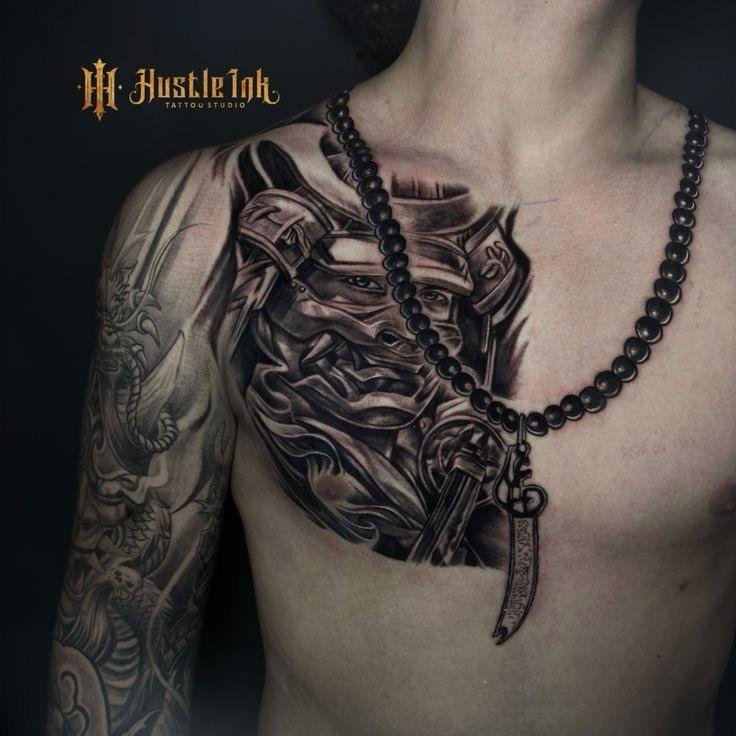
Black and grey Japanese style has become genuinely popular in its own right. Without color, the composition relies entirely on shading and linework for depth and when done well, the result is striking. For clients with concerns about color longevity or who prefer a more understated look, black and grey Japanese is a fully legitimate choice.
Both approaches are available at Hustle Ink. Our color tattoo work in Bali includes Japanese-style compositions in both color and monochrome portfolio examples available on request.
Placement
Composition matters significantly in Japanese style because the tradition was designed for specific body areas.
| Placement | Why It Works |
| Full back | Maximum canvas for large-scale compositions dragon, tiger, multi-motif |
| Sleeve | Most requested internationally; Japanese composition logic maps naturally to arm anatomy |
| Chest panel | Strong canvas for a single large subject |
| Thigh | Good size, minimal stretch over time, sun-protected |
| Calf / lower leg | Popular for koi and wave work |
| Forearm | Right for medium subjects: single koi, snake, tiger face |
For sleeve work specifically, read our guide to sleeve tattoos in Bali it covers what to expect from a multi-session project and how to structure a sleeve over multiple visits.
How Long It Takes
Japanese style takes longer per square centimeter than simpler styles. The density of linework, shading, and color filling adds up quickly.
| Piece | Estimated Sessions |
| Small forearm piece (under 10cm) | 1–2 |
| Medium calf or forearm piece | 2–4 |
| Half sleeve | 4–8 |
| Full sleeve | 8–16 |
| Full back piece | 12–25+ |
For international visitors, starting a sleeve in Bali and returning to progress it over 1–3 years is realistic and common. The linework and initial shading in one trip, color filling and refinement on the next.
Pricing
| Piece | Approx. Rp | Approx. AUD |
| Small forearm (color) | Rp 1,500,000 – 3,000,000 | ~143–286 |
| Medium piece | Rp 3,000,000 – 6,000,000 | ~286–572 |
| Half sleeve (color) | Rp 9,000,000 – 18,000,000 | ~857–1,714 |
| Full sleeve | Rp 20,000,000 – 40,000,000 | ~1,905–3,810 |
A mid-quality Japanese half sleeve in Sydney or Melbourne typically starts at AUD $3,000–5,000. The gap is significant and the quality level at a good Bali studio is competitive with reputable studios in those markets.
How to Choose an Artist
Japanese style is technically demanding. The wrong artist produces work that looks correct at first and deteriorates quickly. Here’s what to evaluate before committing:
Line quality. Japanese tattooing lives and dies on its outlines. Look for clean, consistent line weight without wobble, gaps, or variation that isn’t intentional. Shaky or inconsistent lines are not correctable after the fact.
Color saturation. The red fill should look red deep, solid, and even. Patchy or thin color fill is a sign of undertrained technique or the wrong needle configuration for the skin.
Shading. The transition from dark ink to bare skin is what gives Japanese tattoos depth. Look for smooth gradients in the artist’s portfolio, not streaky or stepped shading.
Composition planning. Ask directly whether the artist designs compositions for the client’s specific body placement, or adapts from existing templates. Good Japanese tattoo composition is custom by nature.
At Hustle Ink, Japanese-style portfolio work is available across multiple artists so the specific approach can be evaluated before booking.
Booking
Japanese work at scale sleeve, chest, back requires planning time before arrival.
For sleeve and larger projects, reaching out 4-6 weeks before a Bali trip allows the artist to prepare a composition that works for the specific body placement and available session time. Smaller pieces (forearm or calf, under 15cm) can often be accommodated on shorter notice depending on availability.
Message via WhatsApp with the concept, reference images, intended placement, and travel dates. The more specific the brief, the better the result.
Japanese Style in Bali: The Bottom Line
Japanese tattooing in Bali offers quality that competes with studios in Australia and Europe at a fraction of the price but the quality gap between artists is real. Choosing based on price alone is the fastest route to a disappointing result.
The right approach: evaluate portfolio work directly for line quality, color saturation, and shading, confirm that the artist plans compositions specifically for the body, and plan time accordingly. For a sleeve, that means more than a weekend trip.
Done well, a Japanese tattoo in Bali is one of the best-value large-format tattoo investments available to international travelers. Done in a rush with the wrong artist, it’s expensive to fix.
You may also want to read our guide on traditional tattoo styles in Bali and our guide to getting a tattoo in Bali before your first consultation.
Frequently Asked Questions
Irezumi is traditional Japanese tattooing as practised historically in Japan. Most Japanese-style work done globally including in Bali works in the visual tradition of irezumi without being traditional irezumi. The practical difference for most clients is minimal.
Koi, dragon, and tiger compositions are consistently the most requested. Wave-pattern work and peony designs are also very common.
No. Black and grey Japanese-style work is well-established and produces excellent results. The traditional form uses color, but the aesthetic translates equally well in monochrome.
Yes many clients choose motifs primarily for their visual impact. That said, understanding what a chosen motif represents often adds personal meaning to the piece.
Realistically 2–4 sessions during a 10–14 day stay enough to establish the linework and begin color on the upper arm. Full sleeve completion typically takes multiple visits over 12–24 months.
Traditional Japanese (irezumi-influenced) uses specific motifs, bold outlines, and the classic color palette of deep reds, blues, and greens. Neo-traditional borrows the bold outline approach but applies it to a wider range of subjects with more contemporary color choices. Related but distinct styles.